What Is a Sensory Gym? A Guide for Clinics, Schools, and Therapy Centers
A sensory gym is a specially designed indoor environment that helps children develop strength, coordination, balance, and sensory regulation through movement and play.
Sensory gyms are commonly used in:
- Occupational therapy clinics
- Pediatric therapy centers
- Autism therapy programs
- Schools and special education classrooms
• Pediatric rehabilitation facilities
These spaces are filled with equipment designed to encourage climbing, swinging, balancing, crawling, and exploring.
For many children, especially those with autism, sensory processing challenges, or developmental delays, movement-based play is not just fun — it is a critical part of development.
Why Sensory Gyms Are Important
Children learn through movement.
Activities like climbing, swinging, and balancing stimulate the body’s sensory systems and help build important neurological connections.
This type of play helps children develop:
- Balance and body awareness
- Coordination and motor planning
- Strength and endurance
- Emotional regulation
- Confidence and Independence
Because of these benefits, many therapists consider a pediatric sensory gym one of the most valuable tools in a therapy clinic.
Parents searching for “sensory gyms near me” or “sensory gym for autism near me” are often looking for clinics that offer this kind of environment.

What Equipment Is in a Sensory Gym?
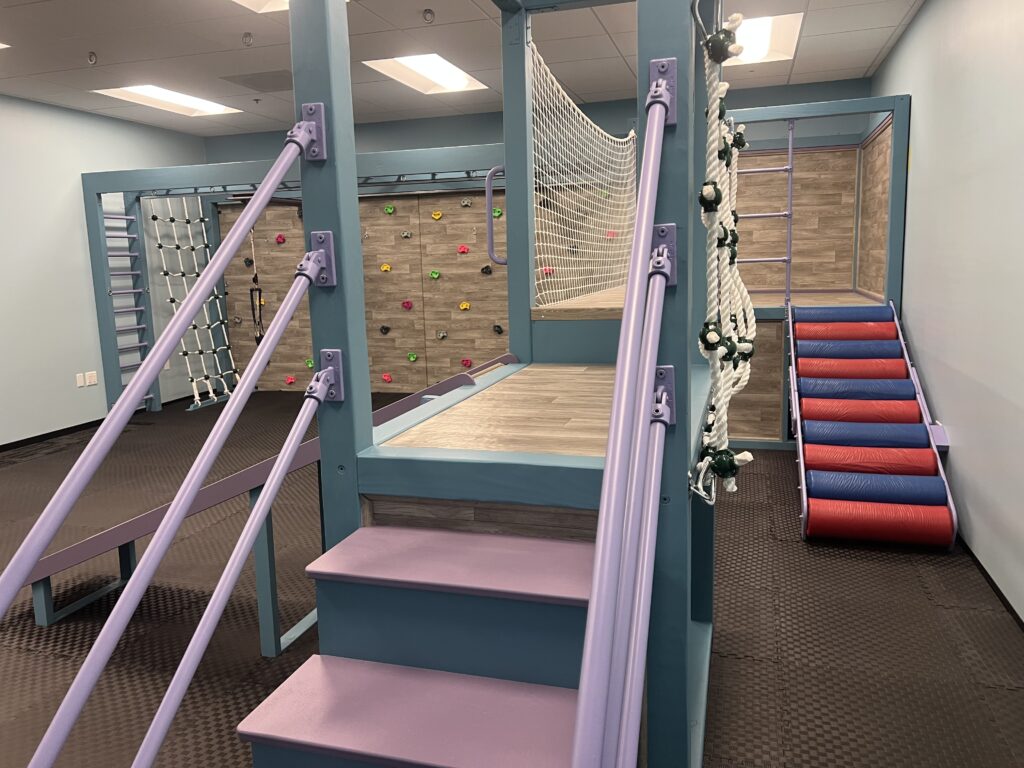
A well-designed sensory gym includes a combination of climbing structures, movement equipment, and calming spaces.
Some of the most common sensory gym equipment includes:
Monkey Bars
Monkey bars are one of the most recognizable features of a kids sensory gym. They help develop upper body strength, coordination, and grip strength.
Swings
Therapeutic swings support vestibular stimulation and sensory regulation. Many clinics include multiple swing options to support different activities.
Rock Walls
Climbing walls help develop strength, motor planning, and confidence.
Cargo Nets and Ladders
These elements encourage creative movement and problem-solving.
Loft Structures
Lofts create elevated play zones and allow children to move through different levels of the gym.
Crash Pads and Soft Flooring
Safety is essential in sensory environments, so most gyms include padded flooring and safe landing areas.

Sensory Gyms for Autism
Many parents and therapists specifically search for sensory gyms for autism.
Children on the autism spectrum often benefit from environments that allow them to move,
regulate sensory input, and build physical confidence.
A well-designed sensory gym can support:
- Sensory regulation
- Motor skill development
- Safe risk-taking
- Confidence building
• Engagement during therapy sessions
These spaces also allow therapists to guide structured activities while still keeping the environment playful and motivating.
Sensory Gyms in Occupational Therapy
In occupational therapy settings, sensory gyms provide a versatile environment for therapeutic activities.
Therapists can design exercises that target:
- Balance and coordination
- Strength and endurance
- Motor planning
- Sensory integration
Many clinics searching for sensory gym equipment for autism or pediatric sensory gym equipment are looking for ways to expand their therapy programs and improve patient engagement.
Designing a Sensory Gym
When planning a sensory gym, several factors should be considered.
Room Size
Sensory gyms can be designed for a variety of spaces, from small therapy rooms to large indoor playground-style environments.
Ceiling Height
Most sensory gyms work well with 8–10 foot ceilings, although taller ceilings allow for additional equipment options.
Safety
Durable construction, secure anchoring, and safe materials are essential.
Customization
Every clinic has different goals, patient populations, and therapy styles. The best sensory gyms are designed specifically for the space and the therapists using them.
How to Open a Sensory Gym
Many therapists and clinic owners ask “how to open a sensory gym.”
The process typically involves:
- Identifying a suitable therapy space
- Planning the layout and equipment
- Designing the structure
- Fabricating the components
- Installing the equipment safely
Some clinics choose a fully custom build, while others start with a design-only plan and build locally with their own contractor.
Commercial Sensory Gyms vs Home Sensory Gyms
There is an important difference between a commercial sensory gym and a home sensory space.
Commercial gyms are designed for:
• Daily clinical use
• Multiple children per day
• Professional therapy sessions
Because of this, they require stronger structures, durable materials, and thoughtful design to support years of use.
Building a Sensory Gym for Your Clinic
At HK Sensory Gyms, we specialize in designing and building custom pediatric sensory gyms for therapy clinics, schools, and institutions.
Our team works with clinics across the country to create environments that are:
• Safe
• Beautiful
• Durable
• Highly functional for therapy
Each gym is tailored to the space and the needs of the therapists using it.
Ready to Build a Sensory Gym?
If you’re planning a therapy clinic, expanding your program, or exploring sensory gym ideas, we’d be happy to help.
Visit www.hksensorygyms.com or follow us on Instagram @HKSensoryGyms to see our work in action. Let’s bring your vision to life.